TECHNOLOGY
Targeting an emerging state of tumors to generate DAMP signals
When cancer cells become stressed or die, they release damage-associated molecular patterns (DAMPs) – endogenous danger signals that alert the immune system to cellular damage.
Macrophages are naturally equipped to sense these signals and respond to changes in their environment.
Cellis harnesses this biology to develop therapies that activate the tumor microenvironment from within.
Rather than simply treating the tumor from the outside, our approach is designed to generate danger signals inside the tumor and engage the immune cells already present there.
MDC - an allogeneic, off-the-shelf macrophage therapy
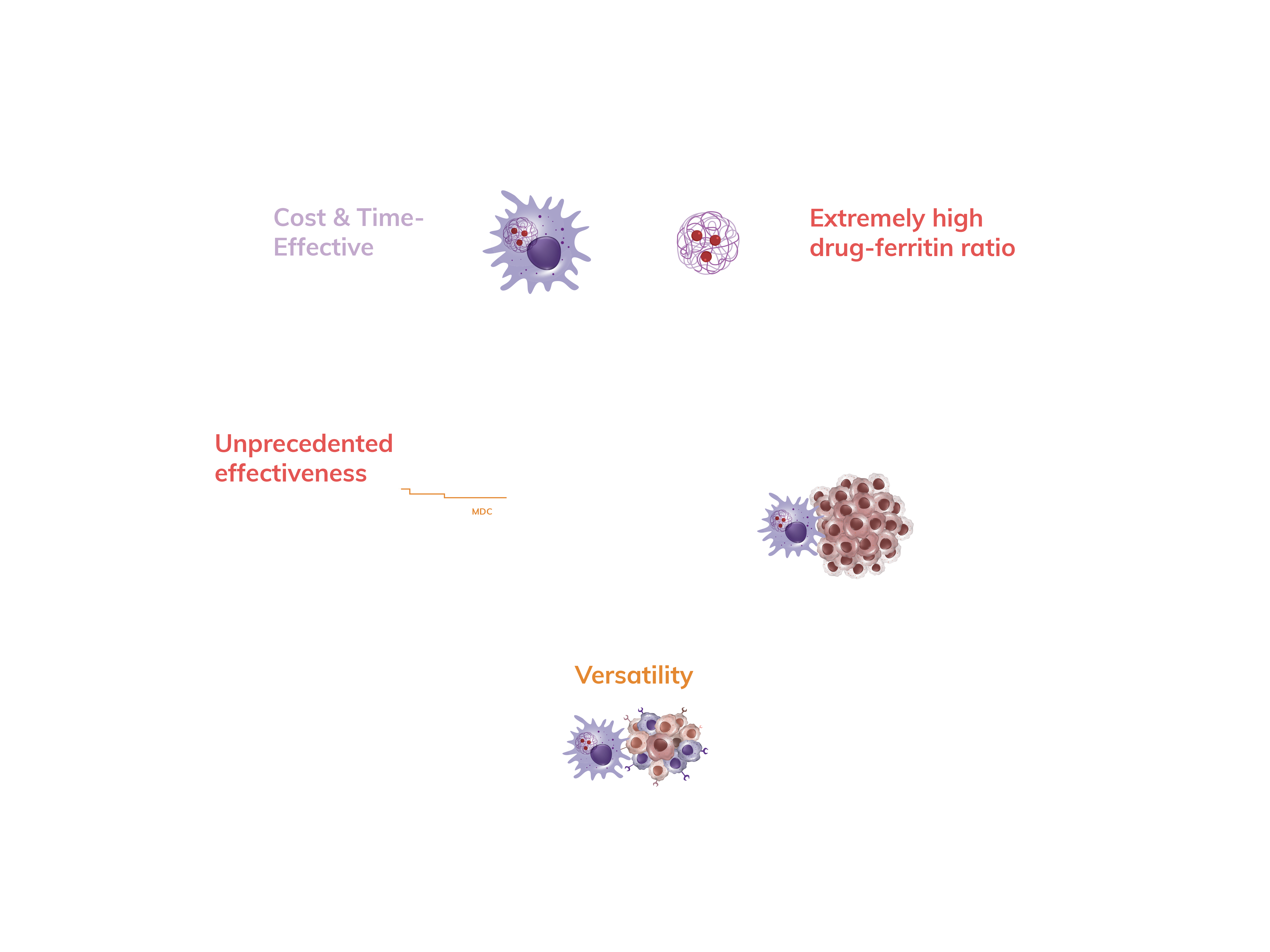
Our proprietary Macrophage Drug Conjugate (MDC) platform consists of macrophages loaded with a ferritin-drug complex.
MDCs are allogeneic, off-the-shelf cell therapies manufactured from healthy donor-derived macrophages. The cells are produced in advance, cryopreserved and designed to be readily available for treatment, enabling a standardized and scalable therapeutic approach without patient-specific manufacturing.
Macrophages naturally migrate toward solid tumors and sites of inflammation, hypoxia and tissue damage. MDCs leverage this intrinsic biology to access the tumor microenvironment and deliver therapeutic payloads directly to cancer cells.
But delivery is only the beginning.
TRAIN - delivering therapy inside cancer cells
Our ground-breaking discovery of the biologic TRAIN mechanism enables MDCs to efficiently transfer ferritin-associated therapeutic payloads directly into the cytoplasm of cancer cells.
This highly targeted intracellular delivery induces tumor cell stress and death.
And this is where the second part of our mechanism begins.
From tumor killing to immune activation
MDC-mediated tumor cell killing generates DAMPs – endogenous danger signals released by stressed and dying cancer cells.
These signals can be recognized by macrophages already present within the tumor microenvironment.
The tumor therefore becomes the source of its own immune-activating signals.
By harnessing this natural danger-sensing biology, MDC are designed to couple direct tumor killing with local immune activation.
Activating macrophages from within the tumor
The tumor already contains the immune cells needed to respond to danger.
MDC deliver the initial therapeutic insult, inducing cancer cell death and generating DAMPs. These signals can then engage macrophages within the tumor microenvironment, providing a local biological trigger for macrophage activation and reprogramming.
This creates a unique therapeutic concept in which the tumor itself becomes the source of signals that can initiate its own immune activation.
MDCs are therefore designed not simply to deliver a drug to the tumor, but to initiate a biological cascade within the tumor:
Why MDC?
Allogeneic & off-the-shelf
MDC are manufactured from healthy donor-derived macrophages and designed as a readily available cell therapy, enabling standardized and scalable manufacturing without patient-specific cell production.
Natural tumor homing
Macrophages are naturally recruited to solid tumors and sites of inflammation, hypoxia and tissue damage, providing MDCs with an intrinsic ability to access the tumor microenvironment.
Intracellular delivery
The proprietary TRAIN mechanism enables efficient delivery of therapeutic payloads directly into the cytoplasm of cancer cells.
DAMP-driven immune activation
Tumor cell stress and death generate endogenous danger signals that can engage macrophages within the tumor microenvironment.
No single molecular target required
MDC activity does not depend on uniform expression of a single molecular target, providing an opportunity to address heterogeneous solid tumors.
Tumor microenvironment modulation
MDCs are designed to combine direct tumor killing with activation and reprogramming of the local immune microenvironment.